
The Detail Shot: Why Facade Documentation Is the Most Underused Tool in an Architect's Portfolio
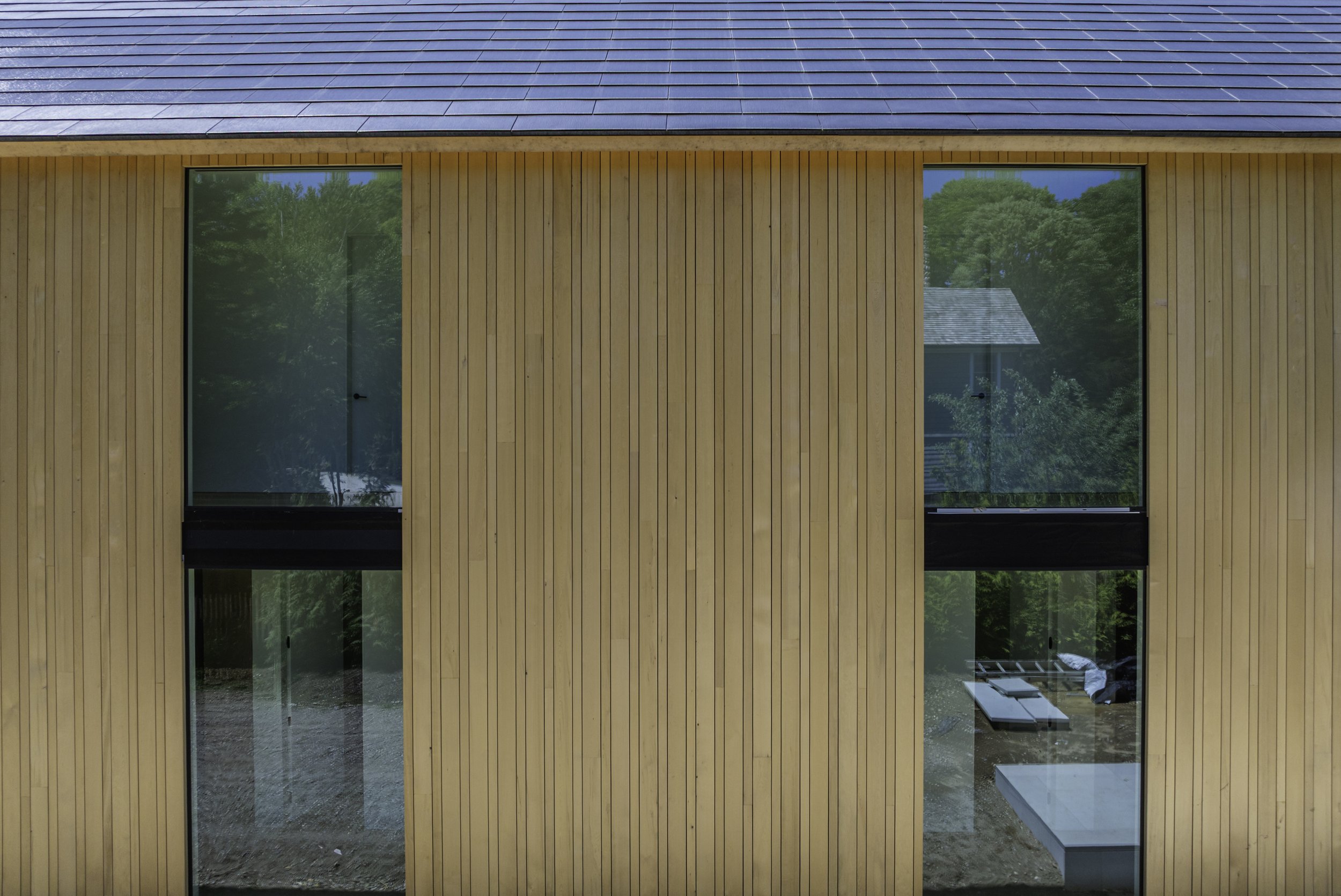
Image taken by Ariel Palma
Most architectural portfolios follow the same pattern. Wide exterior shot. Another wide exterior shot from a different angle. Maybe an aerial if the site warrants it. A few interior rooms. Done.
What's almost always missing is the image that actually closes clients, gets projects published, and wins awards: the detail shot.
Not a snapshot of a material sample. Not a phone photo of a nice window taken on a Tuesday afternoon when the crew was packing up. A properly composed, properly lit photograph of the specific thing that makes your project different from every other project on the market. The cladding system. The window reveal. The material transition at the roofline. The joint between two dissimilar materials that took three rounds of shop drawings to get right.
That image is what separates documentation from storytelling, and storytelling is what gets architects hired.
What a Facade Actually Communicates
The exterior of a building is the first thing every client, editor, award panelist, and future project lead sees. Before they step inside, before they read a project description, before they hear your design narrative, they see the facade. And what they read in those first few seconds is not just "what does this building look like" but "what does this firm care about."
A facade made of vertical cedar cladding paired with floor-to-ceiling black-framed glazing and a curved slate-tile roofline communicates a very specific set of values: restraint, material honesty, precision in detailing. That's a message that speaks directly to the kind of client who is going to invest in a project worth building. But that message only lands if the photography captures it at the right scale, from the right angle, in the right light.
An overall shot from the street shows the whole composition. That's necessary. But it can't tell you about the tightness of the vertical batten spacing, the cleanness of the head and sill details at the window frames, the way the timber cladding transitions to the roofing material at the curved soffit. Those things require a different kind of image entirely. That requires getting close, selecting the right frame, and understanding what you're actually looking at.
For architects working in the Long Island luxury residential market, this distinction is especially important. Clients in this market are sophisticated. They are often comparing multiple firms, looking at multiple portfolios, and making decisions based on design sensibility and evidence of craft. A portfolio that only shows overall views gives them composition. A portfolio that includes strong facade documentation gives them proof.
Why Detail Photography Is Harder Than It Looks
There's a common assumption that close-up photographs are simpler than wide ones. Less to compose, less to manage. That assumption is exactly backwards.
Detail shots are unforgiving. When you move in tight on a facade, there's nowhere to hide. Every inconsistency in the material, every shadow that flattens the surface, every millimeter of keystoning from the wrong lens choice becomes visible. The craft of the building is exposed directly, and so is the craft of the photographer.
Getting a facade detail right requires an understanding of how light interacts with the specific material. Warm-toned wood cladding reads completely differently in flat overhead light versus raking morning sun. Vertical battens with shadow reveals need directional light to show depth; in the wrong light they flatten into a plain surface and the whole point of the detail system is lost. A photographer who has spent time studying how materials are built and how they photograph is not approaching a facade the same way someone pointing a DSLR at a wall would. They're making decisions before the camera is ever raised.
There's also the question of timing. Facade photography on a residential project is constrained by the sun's position relative to the building orientation, the presence of surrounding trees, neighboring structures, and seasonal foliage. A home on Long Island's north shore or South Fork can be surrounded by mature trees that cast dappled, inconsistent light across the facade for most of the day. The window of clean, directional light might be 40 minutes wide. Miss it and you reschedule, or you live with images that don't represent the project fairly.
The Sequence That Gets Projects Published
Publications like Dwell, Luxe, Architectural Digest, and regional shelter magazines all review projects the same way: they evaluate image quality and the narrative logic of the image set. According to research from the Architectural Photography Almanac, editors at major publications weight image quality heavily when selecting projects, and a carefully curated set that balances wide, editorial, and detail shots consistently outperforms portfolios that only show overall views.
The logic is simple. Overall shots establish the project. Editorial shots establish the atmosphere. Detail shots establish the craft. An editor building a feature spread needs all three because their readers engage at all three levels. A client choosing an architect, or a jury evaluating an award submission, works the same way.
The detail shot is often what tips the decision. A tight image of a material connection done well says everything a thousand words of project description cannot. It says: this firm understands how buildings are actually built, and the builder who executed this work knows what precision looks like. For architects who collaborate with skilled custom builders, strong facade documentation is a shared asset. It reflects well on everyone involved.
Long Island's Design-Build Market Demands Better Visuals
The custom home market on Long Island, from the North Shore to the Hamptons and beyond, is one of the most competitive in the country. Firms working here are often going up against regional and national architects with deep publication histories and polished portfolios. The way a smaller or mid-sized firm competes is not on volume. It's on the quality of what they show.
A single project documented well, with a full sequence from site arrival to facade detail to interior, can anchor a portfolio for years. It becomes the project that gets forwarded, that gets referenced in pitches, that generates incoming inquiries. But that only happens if the photography actually does the project justice. A wide shot that doesn't convey materiality, a detail shot taken in flat light that makes a beautifully crafted cladding system look like a plain wall, an image that crops out the most architecturally interesting moment in the elevation — these are not just missed opportunities. They actively misrepresent the project.
Architects who invest in facade documentation as a distinct and intentional part of their photography brief consistently end up with more usable images per shoot, better award submission packages, and portfolio pages that actually communicate what makes their work worth paying attention to.
Documentation Is Part of the Design Process
The best architectural photographers approach a completed building the way a good architect approaches a site visit: with curiosity about how it works, not just what it looks like. What was the design intent behind the material choices? What detail decisions were made at the facade? What does this building do at the moment the light changes?
Those questions produce different photographs than showing up with a shot list and checking angles off a clipboard. They produce images that have a point of view, that make an argument for why the building matters, that give a future client or editor something to think about rather than just something to look at.
For a custom residence on Long Island with a facade that earned its design through careful material selection and precise execution, that kind of photography is not a luxury. It's the appropriate response to what was built.
Sources
7 Ways Architectural Photographers Are Elevating and Complicating the Modern Facade | Architizer
Architectural Photography of Building Details, Facades & Materials | Alex Upton Photography
15 Picture Ideas for Architectural Portfolios | Architecture Helper
What Is Architectural Photography and Why Is It Important | Illustrarch
Your facade deserves a photographer who understands what it took to build it.
Palma Design is an NYC-based architectural photography studio specializing in residential and commercial facade documentation, material detail photography, and completed project portfolios across Long Island, NYC, and the tri-state region. If you're an architect or custom builder with a project that deserves to be seen — and published — we know how to show it.
[View our work or get in touch at palmadesigns.studio]