
You Built It. Now You Have One Chance to Capture It Right.
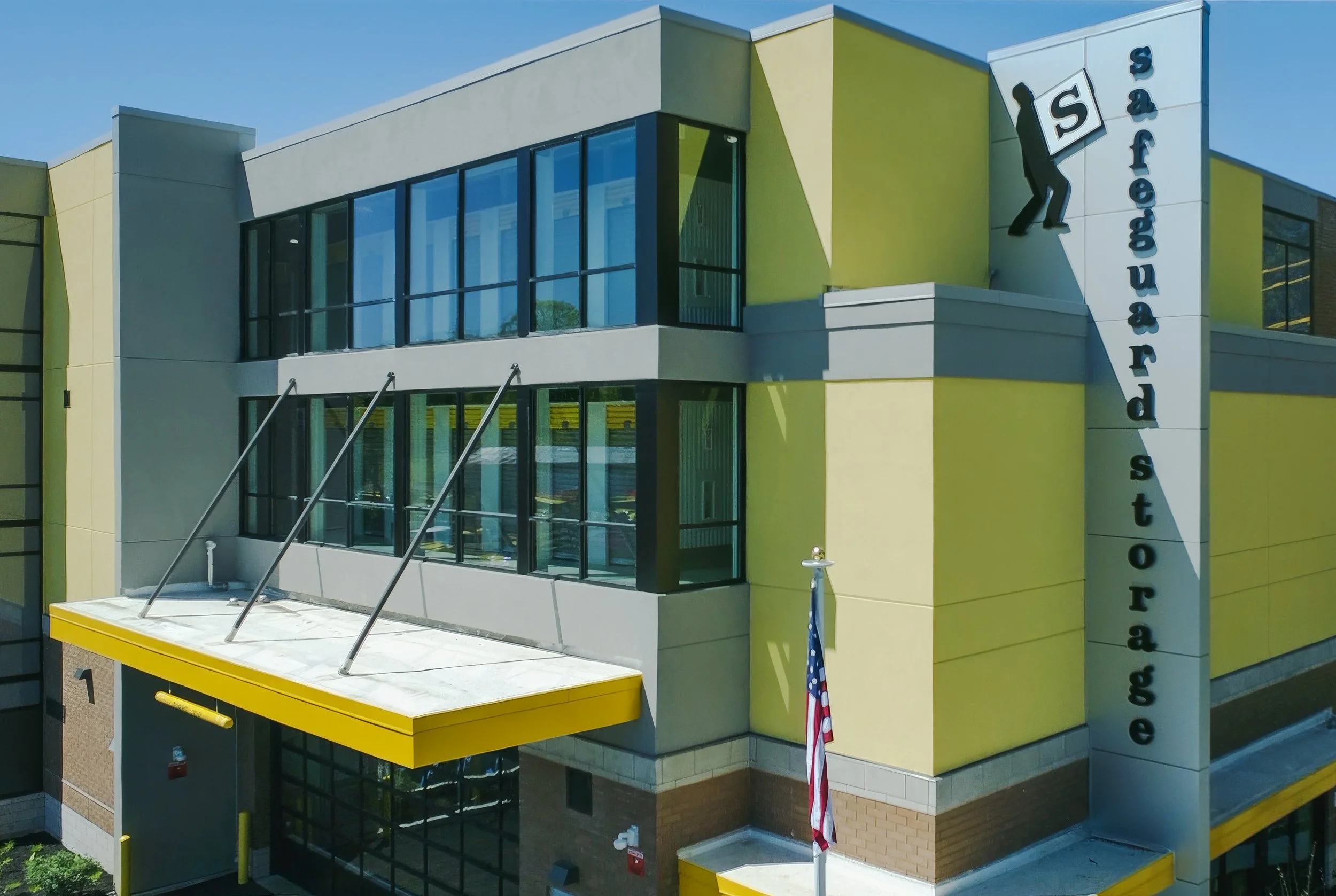
Image taken by Ariel Palma
The ribbon gets cut. The doors open. The signage goes up on a building your team spent 18 months designing, permitting, and constructing. And somewhere in the scramble of final walkthroughs, punch-list items, and move-in logistics, someone grabs a phone and takes a few photos from the parking lot.
That's the visual record of your project. That's what gets uploaded to the website, posted on Google, sent in the press release, and used in the developer's portfolio for the next five years.
For a building that represents millions in investment, that's a problem.
The Grand Opening Window Is Shorter Than You Think
There is a brief, specific period in the life of every new commercial building when the photography matters most. It's right after completion, before the tenants move in, before the landscaping fills in unevenly, before scuffs appear on the facade or a banner gets hung crooked on the entrance. Everything is clean. The lines are sharp. The materials look exactly as the architect intended.
That window is usually measured in days, not weeks.
Developers and operators who miss it don't get a second chance to photograph the "new" version of their building. They get the worn-in version. And in a competitive commercial real estate market, first impressions have a longer shelf life than most people expect. The photos you post when a facility opens are often the same ones that live on your website, your Google Business Profile, and your leasing materials for years.
For a new self-storage facility in particular, the stakes are high right out of the gate. Unlike an established facility that can rely on reputation, word of mouth, and existing customer reviews, a new location has none of that. According to industry research from Inside Self-Storage, the lease-up phase of a new facility is the most marketing-intensive period in its lifecycle. You're competing against nearby operators who already have occupancy, Google reviews, and name recognition. What you have is a new, clean, well-designed building. Make sure the photography actually shows that.
What Ground-Level Photography Does That Drone Can't
There's a tendency to assume that drone photography covers everything. It doesn't. Aerial imagery is exceptional at conveying context, scale, and site layout, but it cannot replace what a ground-level photographer captures at close range.
The architecture of a new commercial building is built to be experienced from the ground. The curtain wall glazing that wraps the facade, the canopy detail at the entrance, the cladding system, the material transitions between brick, metal panel, and glass, the way the signage sits against the building plane. None of that reads from 80 feet in the air. Getting those shots requires a photographer who understands how architectural details are built, knows what angles flatter the geometry, and can work with the available light to capture the building the way it was designed to be seen.
For commercial operators, ground-level images are also the ones that convert. A prospective customer browsing a storage facility's website wants to see the entrance, the lobby, the access points. A developer reviewing the GC's portfolio wants to see the facade in detail, the cladding joints, the glazing system. These are ground-level conversations.
What Drone Photography Does That Ground Can't
At the same time, a building like a new commercial facility has site characteristics that simply cannot be communicated without aerial photography. The full building footprint, how it relates to the surrounding street grid, the parking layout, the visibility from nearby roads, and the overall presence the structure has in its neighborhood. These are not things you can convey with a wide-angle lens standing in the parking lot.
For a storage operator marketing a new location, aerial photography answers the practical questions prospective customers actually have: Is there easy access? Is there parking? How big is this place? Those questions get answered in a single drone shot that no ground-level image can replicate.
For the developer's portfolio, aerial coverage tells the full story of a project. It shows site utilization, massing, and the relationship between the building and its context in a way that has become the standard for any serious development portfolio or award submission. A project presented without aerial photography in 2025 reads as incomplete.
The combination of both, ground and drone, is what makes a documentation shoot genuinely useful rather than just partially useful. One without the other always leaves something critical out.
Why Timing and Coordination Matter as Much as Technical Skill
Professional architectural photography for a new commercial building isn't just about having a good camera and a drone license. It's about knowing when to show up and what to look for when you get there.
The ideal moment for exterior documentation is not midday in direct overhead sun. It's the window in the morning or late afternoon when the light rakes across the facade and reveals depth, texture, and material quality. The difference between a photo taken at noon and one taken at the right time of day can be dramatic. For a building with a bold color palette and strong geometric forms, like a facility clad in bright panels with large glazing sections, directional light is what makes the architecture read.
Beyond timing, there's the matter of site readiness. Scaffolding, construction fencing, dumpsters, temporary signage, and equipment left on site can ruin otherwise strong images. A photographer who has worked on commercial sites knows to communicate with the project manager or GC before the shoot to confirm the site is clean, to identify any remaining construction activity that needs to be avoided, and to flag potential issues before the camera bag is ever unpacked.
One Shoot, Multiple Deliverables
What makes a properly executed completion photography shoot worth the investment is the number of downstream uses the images support. A single well-planned shoot covering ground and aerial provides assets for the operator's website and Google Business Profile, the GC's and developer's portfolios, press releases and local media coverage of the new opening, social media content across LinkedIn, Instagram, and Facebook, and any award submissions the design team or builder plans to make.
That's not one deliverable. That's a marketing and documentation library built from a single coordinated effort. Compare that to the alternative: cobbling together phone shots from four different people who happened to be on site, none of which are usable at print resolution, none of which capture the building at the right light, and none of which give a clear aerial view of the site.
The cost of a professional shoot looks different when you account for everything it replaces.
Closing the Project the Right Way
Every new commercial building represents a significant investment of time, capital, and expertise. The construction team, the architect, the developer, and the operator all have something at stake in how that building is presented to the world.
Professional photography is not a luxury add-on at the end of a project. It is the last stage of quality control: the step that ensures the work your team did is actually visible to the clients, partners, and prospects who will judge your capabilities by what they see.
Build the project well. Then document it the same way.
Sources
10 Marketing Tactics for an Ultra-Fast Self-Storage Facility Lease-Up | Inside Self-Storage
Photography for Real Estate Developers | That Toronto Studio
Complete Guide to Commercial Real Estate Photography | Aerial Southeast
Ready to document your next commercial project the right way?
Palma Design is an NYC-based architectural photography studio specializing in new construction documentation, completed commercial property portfolios, and FAA-certified aerial drone photography across New York City, Long Island, and the greater tri-state region. Whether you're a developer capturing a new facility at opening, a GC building a portfolio that wins future bids, or an operator who needs strong visuals for a lease-up campaign, we bring both the ground and the air.
[View our work or get in touch at palmadesigns.studio]