
The Last Shot on Every Job: Why Finished-Project Documentation Is the Marketing Asset You're Missing
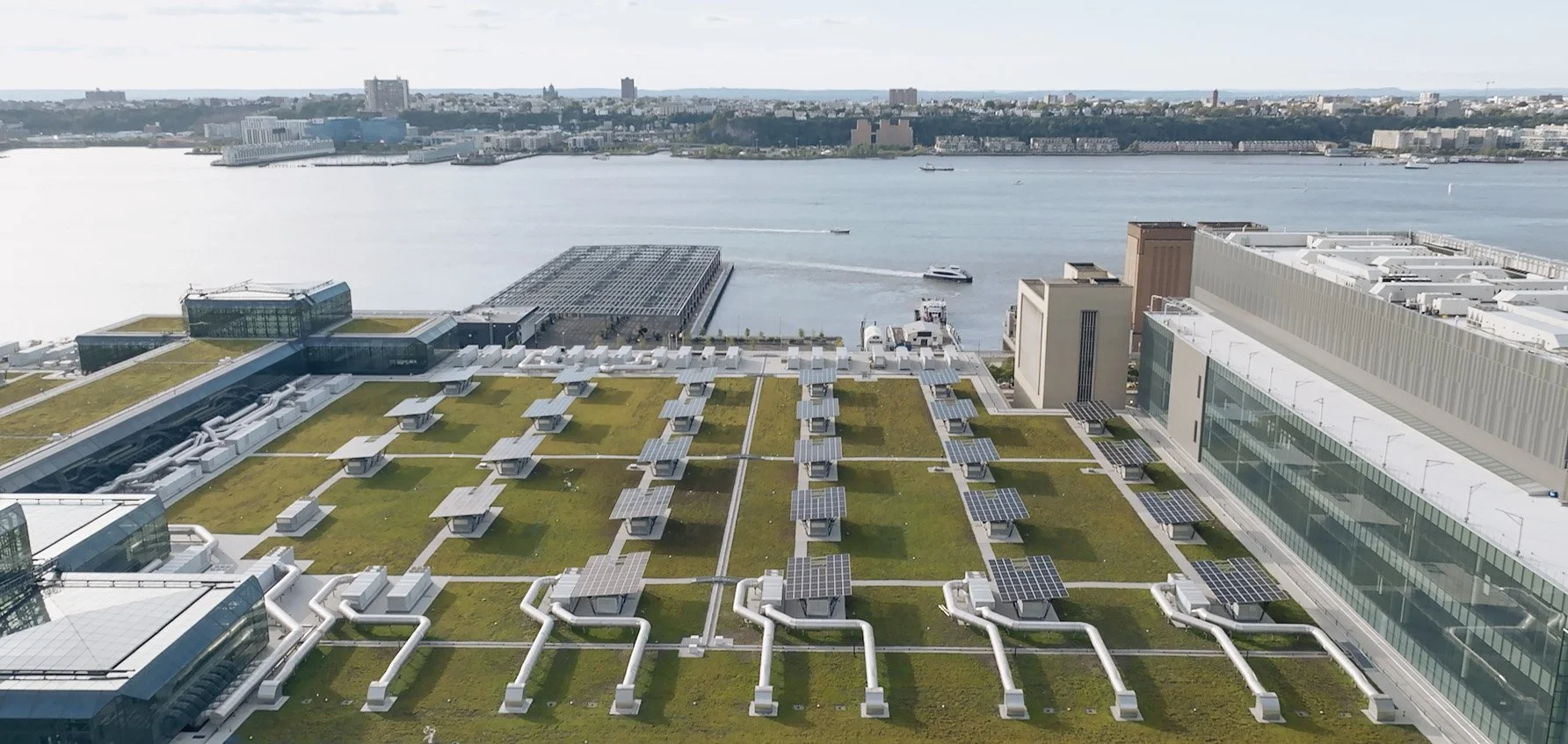
Image taken by Ariel Palma
You just wrapped a solar installation on a commercial rooftop in Queens. The arrays are laid out cleanly, the wiring is tucked, the green roof is lush and growing. Your crew did exceptional work. The client is happy. You shake hands and move on to the next job.
And then someone pulls out a phone, snaps three crooked photos from ground level, and that's the last record of one of your best projects.
If that sounds familiar, you're leaving serious money on the table.
The Gap Between the Work You Do and the Work You Show
In construction and contracting, the project doesn't end when the punch list is signed. It ends when you've captured it. Not with a quick phone snapshot before the scaffolding comes down, but with photography that actually communicates the scale, precision, and quality of what your team built.
This matters more than most contractors realize. Your portfolio isn't just a gallery for clients to browse. It's the first thing a developer checks before shortlisting you for a bid. It's what an architect sends to their client when recommending a GC. It's the image a solar developer posts when announcing a completed project to their investors. And if you're submitting to AIA, ASID, or regional builder award programs, the photography requirements are specific: they want spatial sequences, material close-ups, site relationship shots, and multiple angles. A blurry phone photo from the parking lot is not going to move the needle.
The number-one reason contractors have weak portfolios isn't effort. It's photography.
What a Finished-Project Photo Actually Needs to Do
Here's what separates documentation from marketing: documentation proves you were there. Marketing makes someone want to hire you.
A finished-project photo has to do three things at once. It has to show the scope of the work, the quality of the execution, and the environment the project lives in. On a commercial rooftop solar installation, that means capturing the geometry of the array, the cleanliness of the conduit runs, and the relationship between the system and the building and the skyline around it. None of that is possible from the ground with a phone.
This is where aerial photography changes everything for solar and green infrastructure contractors. A well-executed drone shot from above a finished rooftop installation shows things no ground-level photo can: the full footprint of the array, how it integrates with the structure, the precision of the row spacing, and the context of the surrounding environment. That one image can carry a proposal, a case study, an award submission, and a social media campaign simultaneously. It's not decoration. It's a business asset.
The challenge is that not every photographer can get you that shot legally. In New York City, drone operations fall under some of the most restricted airspace in the country. Flying without an FAA Part 107 certification and proper authorizations isn't just a legal risk for the operator, it's a liability risk for you as the property owner or client. If your current photographer or in-house documentation process involves an uncertified drone, you're one complaint away from a problem no portfolio is worth.
The Return-Trip Problem
Here is a statistic worth paying attention to: according to research from SiteCapture and Solar Power World, 60% of solar installers send a team back to a job site at least once per project just to collect missing photos. The average cost per return trip is $475. For a company running 60 residential or commercial projects per year, that adds up to more than $17,000 in avoidable losses annually.
That number doesn't include the soft costs: the project manager's time rescheduling access, the crew pulled off a current job to get back to a finished one, the client who's frustrated that your team is back on their roof two weeks after completion. The root cause in almost every case is the same: no consistent documentation process at closeout.
A professional photographer who specializes in construction and infrastructure projects solves this by knowing what to capture before they arrive. They've been on enough job sites to understand what milestone the photo needs to represent, what angles tell the story of the installation, and what lighting conditions make the difference between a usable image and a throwaway one. You don't get a bill for a return trip because they don't need one.
What Good Looks Like for Solar and Green Infrastructure
The best finished-project photography for contractors in the solar, green building, and construction space tends to follow a consistent logic: wide establishing shots, mid-range system shots, and detail close-ups.
Wide shots, especially from the air, establish scale and context. They show the full array or green roof system in relation to the building, the neighborhood, and the sky. These are your hero images, the ones that open proposals and anchor case studies.
Mid-range shots document the system as a whole from accessible angles. These show panel alignment, mounting system quality, penetration points, conduit management, and the overall neatness of the installation. For a general contractor, these are the shots that speak directly to a developer or building owner who knows what sloppy work looks like.
Detail close-ups are often the most overlooked. Connections, racking hardware, flashing details, junction boxes, labeling. These photos matter for O&M documentation, for permit closeouts, and for demonstrating craftsmanship to a client who is evaluating your team against a competitor's for the next project.
Taken together, these images aren't just marketing. They're a professional record of the work, one that holds up in bid processes, award programs, and client references.
The NYC and Long Island Reality
Working in the New York metro area adds layers that matter for documentation. In NYC, drone operations require FAA Part 107 certification and, depending on the borough and the airspace class, LAANC authorization or a waiver from the FAA. Most of New York City falls within controlled airspace. Flying without the proper credentials isn't a gray area.
Beyond compliance, the market here is competitive in a way that makes strong visuals more important, not less. Developers, architects, and property owners in NYC and Long Island are evaluating multiple contractors for every significant project. Your portfolio competes directly with every other bidder's. If theirs has polished aerial shots of completed rooftop systems and yours has three phone photos taken from the parking lot, the visual impression is already made before anyone reads a line of your proposal.
Closing the Loop on Every Project
The best contractors in this market treat photography the same way they treat the final inspection: it's part of closeout, not an afterthought. They schedule it before the project wraps, make sure site access is clean, and walk away from every job with images that actually represent the quality of their work.
If you've been skipping this step, or leaving it to whoever has a phone handy on the last day, the good news is that it's an easy fix. One properly documented project can become the anchor of your portfolio, your website, your next proposal, and your award submission. The work is already done. You just need the right images to show it.
Sources
Jobsite Photo Documentation Guide for Every Industry | SiteCapture
Commercial Roof & Solar Drone Content: Marketing vs. Inspection | Nitro Media Group
Construction Project Photography Strategy for Contractors | Panaskopic Productions
How Drone Photography Can Elevate Construction Projects | Conversion Building Group
Ready to close out your next project the right way?
Palma Design is an NYC-based architectural photography studio specializing in construction documentation, finished-project portfolios, and FAA-certified aerial drone photography across New York City and Long Island. Whether you're a solar contractor documenting a rooftop installation, a builder capturing a completed green infrastructure project, or a GC building a portfolio that wins bids, we show up prepared and deliver images that actually work for your business.
[View our work or get in touch at palmadesigns.studio]