
Why Your Project Photos Are Costing You the Next Contract (And What to Do About It)
You just finished one of the best builds of your career. The millwork is flawless, the site came in on schedule, and the client couldn't stop talking about how it turned out. You walk away thinking this one is going straight to the portfolio — maybe even the proposal deck for that luxury developer you've been trying to land.
Then you pull out your phone, scroll back through the job site photos, and feel your stomach drop.
Blurry. Poorly lit. Half the shots have a worker's hard hat cropping into the frame or a stack of materials cluttering the foreground. The ones that aren't blurry are just... flat. They look nothing like the space you actually built.
You se them anyway, because what choice do you have?
This is one of the most common and most quietly damaging situations facing builders, general contractors, architects, and interior designers working in the New York metropolitan area right now. The work is exceptional. The photography isn't. And in a market as competitive as NYC and Long Island, the gap between those two things is costing you real business.
The Problem Nobody Talks About
In a traditional trade, your reputation traveled by word of mouth. A satisfied client told a neighbor, who called you for a quote, who became your next job. That still happens — but it's no longer enough on its own.
Today, before a developer, architect, or homeowner ever picks up the phone, they've already looked you up. They've been to your website, scrolled your Instagram, and flipped through your project gallery. In those first thirty seconds, they've already made a judgment call about whether your firm is worth the investment.
A 2026 marketing report on the construction industry put it bluntly: if your photos don't reflect the quality of your work, you're training clients to undervalue you. And in a market where your competitors are equally skilled and equally hungry, an underwhelming photo gallery is one of the fastest ways to lose a bid before a conversation even starts.
The frustration is real — because most builders and contractors aren't losing work because they do bad work. They're losing it because they can't show their good work in a way that lands.
The Photographer Who Doesn't Understand Your World
Even when builders decide to invest in photography, they often run into a second problem: the photographer they hire doesn't understand construction.
This isn't a criticism of photographers in general — it's an industry knowledge gap. Most photographers who do commercial or real estate work are used to showing up to a finished, staged, and immaculate space. That's a very different job than documenting a luxury residential build in stages, or capturing a completed commercial renovation in a way that tells the story of the craftsmanship involved.
Construction sites have timelines. There's a narrow window to photograph concrete formwork before it's stripped, or to capture a mechanical system before it disappears behind drywall. Miss that window, and it's gone. A photographer who doesn't understand construction sequencing will either show up at the wrong time or not know what they're even looking at when they get there.
Site safety is another issue that catches generic photographers off guard. OSHA protocols, PPE requirements, and site access rules aren't optional — and a photographer who doesn't know the rules creates liability for the contractor. There's also the simple coordination problem: matching a shoot schedule to a busy construction calendar, working around subcontractor crews, knowing when a space will be clean enough to photograph without looking chaotic.
What builders and architects in NYC and Long Island keep discovering is that finding a photographer with genuine technical skill and fluency in the construction and design world is genuinely difficult. The two don't often come in the same package.
What Professional Construction and Architectural Photography Actually Does for Your Business
Let's get specific about what's at stake, because it goes beyond having a nice-looking website.
It wins proposals. Bids aren't decided solely on cost. Decision-makers — developers, architects, sophisticated homeowners — are evaluating whether they trust you to handle something that matters to them. A portfolio of sharp, professionally shot project images signals competence in a way that no written description can replicate. According to industry research, contractors who use professional imagery in their proposals are significantly more likely to win high-value projects. The photos aren't just marketing. They're proof.
It builds referral currency. When a satisfied client wants to recommend you to a colleague, what do they send? A link to your site. A screenshot from Instagram. If those images look professional and polished, your client is proud to make that introduction. If the photos are underwhelming, the referral still happens — but with a caveat. "Their work is great, the website doesn't really do it justice." That's a tax on your reputation, and it compounds over time.
It creates a record that protects you. Progress documentation isn't just marketing. For contractors, thorough site photography at key milestones is a record of the work performed, a reference point for disputes, and evidence of compliance with specs and scope. When photographed properly — with attention to what's being documented and why — these images carry real weight.
It differentiates you in a crowded market. The NYC and Long Island construction and architecture market is dense. There are exceptional firms competing for the same projects. Professional photography is one of the clearest ways to visually communicate that your firm operates at a different level. It says, without saying it, that you take your work seriously enough to show it properly.
What It Looks Like When It's Done Right
Palma Design is an architectural and construction photography studio based on Long Island, serving builders, contractors, architects, and interior designers across Long Island and New York City. The work at Palma Design is built around one core understanding: the people who hire us have invested months — sometimes years — into a project. The photography should honor that investment.
That means arriving with knowledge of the build. Understanding what matters to a contractor is different from what matters to an interior designer, which is different from what an architect cares about when they're documenting a completed project for an award submission. Getting those shots right requires more than a good camera. It requires knowing the industry.
It also means being a professional in the field. Palma Design operates on construction sites with proper preparation — coordination with site supervisors, respect for safety protocols, and the flexibility that real-world construction timelines demand. If the shoot needs to shift because a crew ran long, we work with it. If there's a one-hour window where the light is right and the space is clear, we're ready.
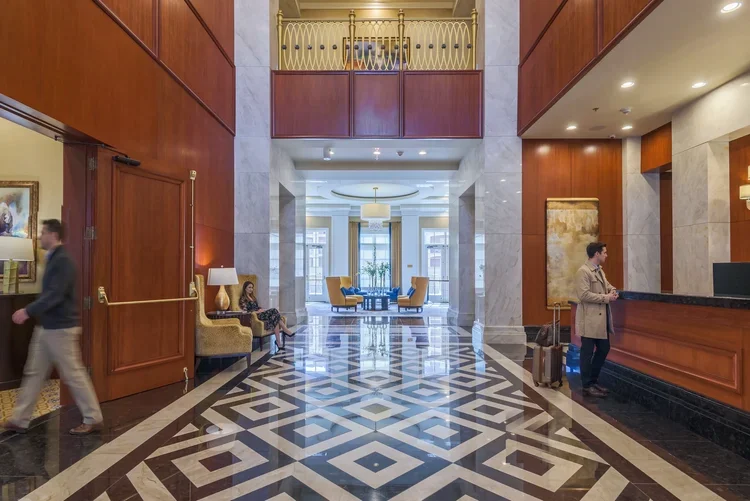
The finished images are designed to work. Clean, well-lit, composed to show the craftsmanship and the scale and the quality — and shot in a way that works across proposals, websites, social media, and award submissions without needing to be re-cropped or re-edited for each use.
The Opportunity Cost of Waiting
Here's the thing about not investing in photography: it feels like a savings. A shoot costs money. A good one costs real money. So it gets pushed to "after the next big job" or "once we nail down a few more clients."
But in a market where your portfolio is doing active selling work every day — every time someone searches your firm, every time a developer lands on your website, every time you submit a proposal — the cost of waiting is the difference between the projects you get and the ones that go to someone else.
The builders and contractors who are winning premium projects on Long Island and in New York City right now understand something important: the photography isn't a luxury. It's infrastructure. It's the foundation of how you present your company to people who have never met you but are considering trusting you with a million-dollar project.
Let's Make Your Work Look Like What It Is
If you're a builder, contractor, architect, or interior designer in the New York area and you're sitting on completed projects that haven't been properly documented — or you want to get ahead of it and plan photography for an upcoming build — Palma Design is ready to work with you.
Reach out through palmadesigns.studio to start a conversation. We'll talk through your project, your goals, and what a shoot would look like. No pressure, no boilerplate — just a real conversation about how to make your work visible.
Your craft deserves to be seen the way you actually built it.
Palma Design · Architectural Photography · Drone Documentation · Web Design · NYC, Long Island & North NJ