
Why Every Demolition and New Build in NYC Deserves a Hyperlapse (And What It Does for Your Business
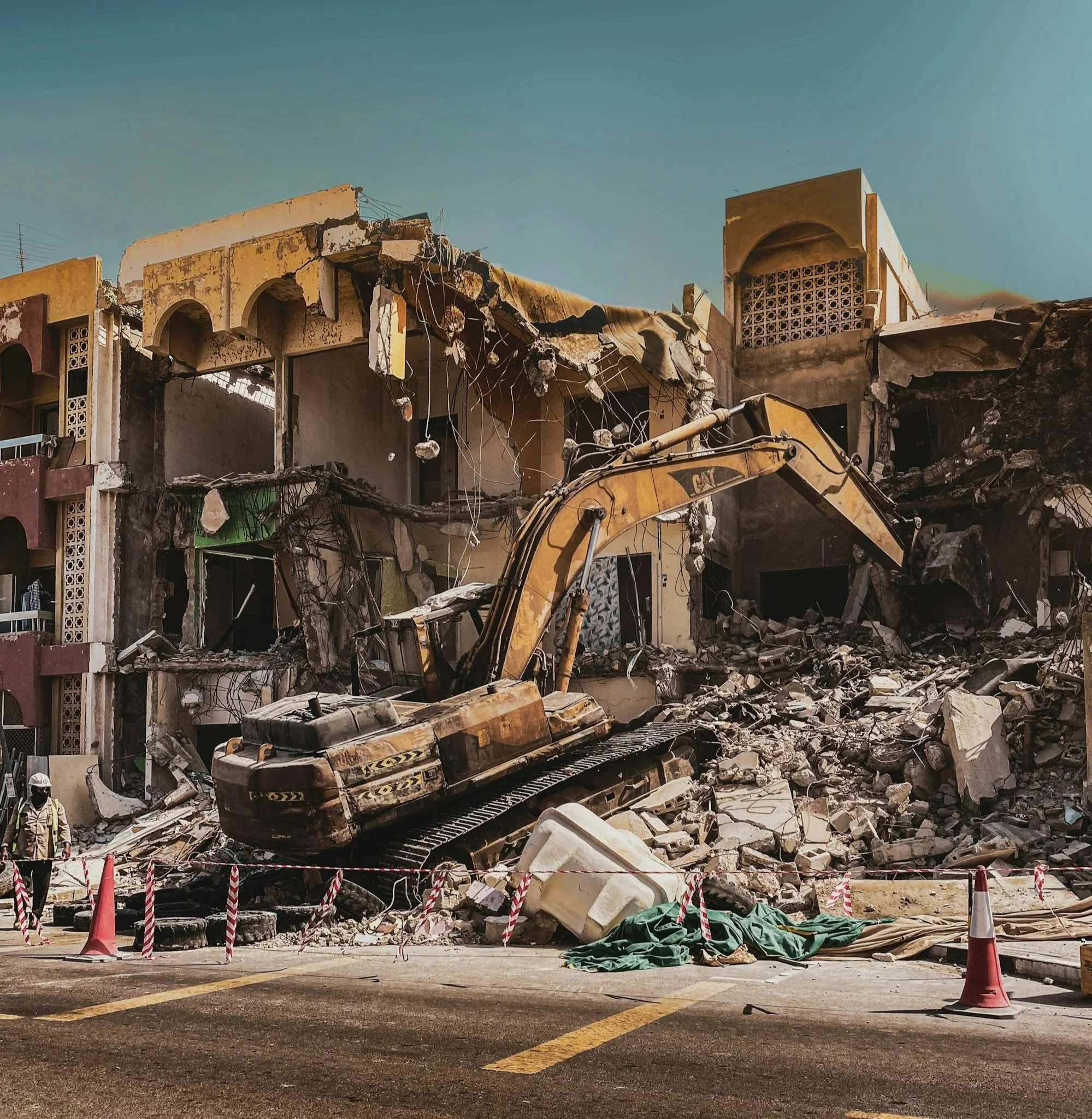
There's a moment on every demolition job that's almost impossible to explain to someone who wasn't there. One week you're standing in front of a 1960s brick building that's been on the same corner for sixty years. Two weeks later, it's rubble. Then steel. Then concrete. Then glass. Then it's a building again — but a completely different one.
Builders and general contractors know that transformation better than anyone. But most of the time, no one else sees it. The client sees the finished product. Future clients see a photo of the finished product. And everything that happened in between — the complexity, the coordination, the sheer physical scale of what was accomplished — is invisible.
That's exactly the problem a hyperlapse solves. And for builders and contractors working in the NYC and Long Island market, it's quickly becoming one of the most powerful tools in your marketing arsenal.
Hyperlapse vs. Timelapse: What's the Difference and Why It Matters
Most contractors have heard of timelapse — a fixed camera shooting at intervals over days or months, compressing weeks of work into a few dramatic minutes. Timelapse is great. But hyperlapse takes that concept further.
Where a timelapse stays in one place, a hyperlapse moves. The camera travels through space as time is compressed, creating the feeling of flying through a project — walking the site as a building rises, orbiting a structure as it comes down, moving through floors as they're framed out. The result is far more cinematic and far more shareable than a static shot.
For a demolition project, the effect is genuinely dramatic. A building coming apart in ninety seconds — dust, steel, the rhythm of an excavator arm — is the kind of content that stops a scroll. On Instagram, on LinkedIn, on your website's homepage. Clients watch it. Other contractors watch it. Architects and developers watch it and think: these are the people I want on my next project.
That's not an accident. It's a tool.
What Builders and GCs Are Actually Using This For
The most obvious use is marketing — and it works exceptionally well. A hyperlapse of a full demolition and ground-up build compressed into two or three minutes tells the story of an entire project in a way no photo gallery can match. It shows scale, complexity, timeline, and execution all at once.
But the applications go beyond Instagram. Here's how builders in the NYC area are putting hyperlapse and timelapse documentation to work:
Client communication. On a high-budget custom build or commercial renovation, owners want progress updates constantly. A weekly timelapse clip sent alongside your progress report is a professional touch that the competition isn't offering. It builds confidence. It reduces the number of calls asking "where are we with this?" And it makes the client feel like they're part of the process, not waiting on the outside.
Project records. Demolition especially creates disputes. What was uncovered when? What was the site condition at week three versus week seven? A continuous visual record is your best protection if questions arise later about sequencing, subcontractor work, or site conditions. A timestamped visual archive is more reliable than memory and more defensible than written logs alone.
Winning future bids. When you sit down with a new client and you can pull up a hyperlapse of a similar project — here's a five-story gut renovation we did in Long Island City, start to finish, eight months in ninety seconds — that's a more compelling portfolio presentation than any PDF. It's proof of capability at scale, delivered in a format people actually want to watch.
Recruitment and reputation. The construction labor market is tight. Showing the quality of your sites, your equipment, and the caliber of your work in a dynamic video format is a recruiting tool as much as a marketing one. It says: this is what it looks like to work with us.
Why This Is Especially Valuable in NYC and Long Island
The New York market has specific dynamics that make this kind of documentation particularly valuable.
Space is tight. Demolition and construction in New York often happens within feet of neighboring structures, live utilities, and active street traffic. The logistics are complex in a way that projects in less dense markets simply aren't. A well-executed hyperlapse of an urban demolition shows potential clients and partners exactly how you operate under those constraints — and that's a very specific credibility signal that's hard to communicate any other way.
Permit and compliance documentation is also more intensive in New York than almost anywhere else in the country. Having a thorough visual record of your site throughout a project isn't just good practice — it's protection. NYC DOB inspections, neighbor complaints, and contractor disputes are part of the landscape. Visual documentation that's been professionally captured and properly organized is an asset when any of those situations arise.
And from a competitive standpoint: the builders and general contractors who are winning high-value projects in the Hamptons, North Shore, and throughout the boroughs increasingly have polished digital presences. Developers and luxury homeowners are choosing contractors partly on reputation and partly on how professional you appear before a single meeting happens. A strong hyperlapse library signals that you're operating at a different level than competitors who are still posting blurry phone shots of finished kitchens.
What Goes Into a Good Construction Hyperlapse
Not every hyperlapse is created equal — and this is where working with a photographer who understands construction makes a real difference.
Timing is everything. For a demolition, you want to start capturing from day one — once the building is down, that story is gone. For a new build, the most compelling frames are often the structural phases that disappear behind walls: the foundation pour, the framing, the mechanical rough-in. Once drywall goes up, those elements are invisible forever. If you're not capturing them as they happen, you've lost the opportunity.
Camera placement and movement also matter. A generic wide shot from across the street tells a very different story than a camera positioned to show the excavator arm working, the crew on scaffolding, the steel being set. Good construction hyperlapse requires someone who knows what's happening on the site well enough to anticipate where the most compelling moments will be — and who can move safely through an active job site without disrupting operations.
Consistency across the timeline matters too. The best project hyperlapses use consistent angles and camera positions so the viewer can actually track the transformation — the same corner of the building, the same floor plate, week after week. That requires planning at the start of the project, not just showing up at the end and trying to piece together something usable.
Palma Design Documents What Other Photographers Miss
At Palma Design, we work with builders, general contractors, and developers across NYC and Long Island who want their projects documented at a professional level — from the first swing of the excavator to the ribbon cutting.
That means showing up at the right phases, understanding your site timeline, and capturing the kind of hyperlapse and progress footage that actually tells the story of what you built. We know construction sites. We know NYC. And we know that the most compelling thing you can put in front of a new client isn't a finished photo — it's the whole journey, in ninety seconds, that shows exactly how you got there.
If you have a demolition, a ground-up build, or a major renovation coming up in the NYC area, let's talk about documenting it right — from day one.
Contact Palma Design at palmadesigns.studio to discuss project documentation and hyperlapse packages for your next build.
Palma Design · Architectural Photography · Drone Documentation · Web Design · NYC, Long Island & North NJ