
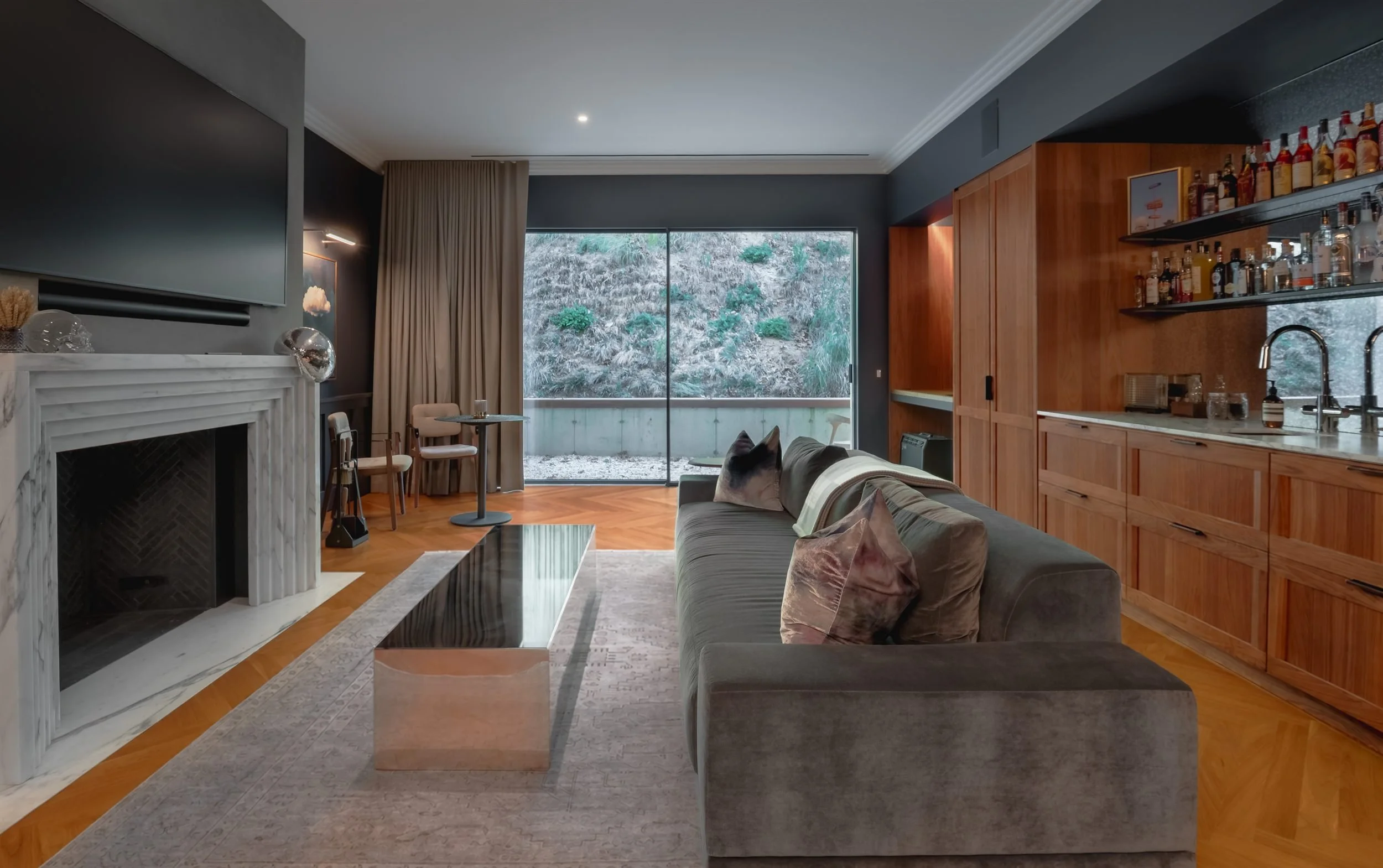
Image taken by Ariel Palma
You just handed over a $2 million build. The finish work is flawless, the client is thrilled, and the only record of it is a folder of phone photos taken at 4 p.m. with the work lights still on.
Every builder, architect, and designer we talk to has some version of this story. The project is the best thing on your résumé, and the images make it look like a stranger's.
Hiring a photographer should fix that. But if you've ever tried to find one who actually fits the construction and architecture world, you know it isn't simple. Here are the three problems we hear most, and what to do about each.
Problem 1: The photographer who doesn't understand a job site
Ask a few superintendents about the worst photo visit they've hosted and the stories rhyme. Someone shows up in sneakers. Someone wanders into an area that isn't signed off. Someone frames a shot from a spot that makes the crew wince, and now there's a photo of a safety problem sitting in your marketing folder.
That last one matters more than most people think. Contractor trade publications have warned that jobsite photos can show questionable practices, and once an image is public, you can't take it back. A photographer who doesn't know what a compliant site looks like can create a liability while trying to create an asset.
The basics aren't complicated, and you should expect all of them:
Proper PPE, their own. Hard hat, vest, safety glasses, boots. Borrowed gear and sneakers are red flags.
A certificate of insurance. General liability coverage, ready to send before the shoot, with your company named as additional insured if your GC or owner requires it.
Site orientation comfort. They sign in, attend the safety talk, and stay out of the trades' way.
FAA Part 107 certification for any drone work. If aerial imagery is in the scope, the pilot should be certified and should coordinate flights with the site.
This is where specialization matters. Palma Design carries general liability insurance, and our drone pilot is FAA Part 107 certified. We work around active construction regularly, so we know when to shoot, where to stand, and what to keep out of the frame. You don't have to supervise us. That's the point.
Problem 2: Photography treated like an afterthought
Look at the websites of most small and mid-size builders and you'll see the same pattern: great work, weak images. Photography is the first line item trimmed, and the project gets documented by whoever has a phone.
The trouble is that visual quality becomes a stand-in for build quality. A prospective client or developer can't inspect your trim carpentry from a laptop. They can only judge the photos. If the photos look rushed, they assume the work might be too. And you never find out about the clients you lost this way. They don't call to say your portfolio didn't convince them. They just move on to the next firm.
Architects face a different version of the same issue. The building was designed with intention: the way light moves through a stair hall, the proportions of a facade, the sequence from street to lobby. A snapshot flattens all of it.
Good architectural photography does three things phone images can't:
It controls the light. Shooting at the right time of day, balancing interior exposure against the view outside, and correcting color when work lights fight daylight.
It controls the geometry. Straight verticals, deliberate composition, and angles that show how spaces connect.
It tells the story of the project. Not just a wide shot of every room, but the details that show craft.
At Palma Design, interiors are part of architectural photography, not a separate service. A kitchen is part of the building, and it gets the same attention to structure, light, and sightlines as the exterior. That's how a portfolio reads as one cohesive body of work instead of a mix of styles.
Problem 3: Shoots that go sideways, and nobody told you why
Even with a good photographer, the process itself frustrates people. Trade guidance on hiring architectural photographers keeps circling the same trouble spots.
The cost question. Experienced architectural photographers charge real money, and day rates quoted in the trade press run well into four figures before assistants, travel, and licensing. Many firms split the cost with others on the project, such as the builder, architect, and key suppliers, so everyone gets images for their own portfolio. It's a smart approach, but only if usage terms are clear up front.
The prep question. A messy site wastes shoot time. Punch-list items, stray tools, protective film on windows, and missing furniture all show up on camera. Photographers consistently say a clean, staged space saves hours on the day. But nobody tells builders this ahead of time, and nobody wants to be the one who delayed a shoot over a missing outlet cover.
The weather and scheduling question. Exteriors depend on sky and light. A good photographer has a backup plan and will reschedule rather than deliver a flat gray set because the calendar said Thursday.
The fix for all three is a photographer who communicates. Before every shoot, we walk through a short checklist with you: the shot list, access and site logistics, what needs cleaning or staging, weather contingencies, and exactly how the images may be used. No surprises on the day, and no confusion afterward about who can post what.
Why local matters
New York and Long Island aren't easy places to shoot. Tight urban lots, limited street access, shared buildings, co-op and condo rules, and sites that change every week. Add North Jersey, and you're juggling different municipalities on the same project list.
We're based in the NYC area and serve architects, builders, developers, and construction companies across the city, Long Island, and North New Jersey. We already know the logistics, the light, and the building types, from brownstone renovations to commercial fit-outs to large-scale facilities.
What we shoot for the people who build
Architectural photography, interiors included, for portfolios, award submissions, publications, and websites.
Drone documentation for exteriors, site context, and aerial views.
Finished-project documentation for trade contractors. Electrical and other specialty contractors rarely get good images of their own work, even though they're often the reason the building works. We shoot those projects so you can use the images in your own portfolio.
Construction timelapse, a newer service for owners and builders who want to show a project from groundbreaking to completion.
We're a small studio, and that's an advantage. You deal directly with the people doing the work, not a rotating cast of subcontracted shooters.
A better way to start
If you take one thing from this post, let it be this: ask the questions above before you book anyone. Ask for the certificate of insurance. Ask about PPE and site experience. Ask how usage rights and cost-sharing work. Ask what they need from you to make the shoot go smoothly. A photographer who answers confidently and specifically has done this before.
And if you have a project coming to completion in the next few weeks, the best time to talk is now, before the punch list closes out and the furniture goes in.
Let's talk about your next project
If you're a builder, architect, designer, or developer in NYC, Long Island, or North New Jersey and you want your work to look the way it feels in person, we'd like to hear about it.
Contact Palma Design at palmadesigns.studio to talk through your project, your timeline, and what you need the images to do. We'll tell you honestly what we'd shoot, what it takes, and whether we're the right fit.