
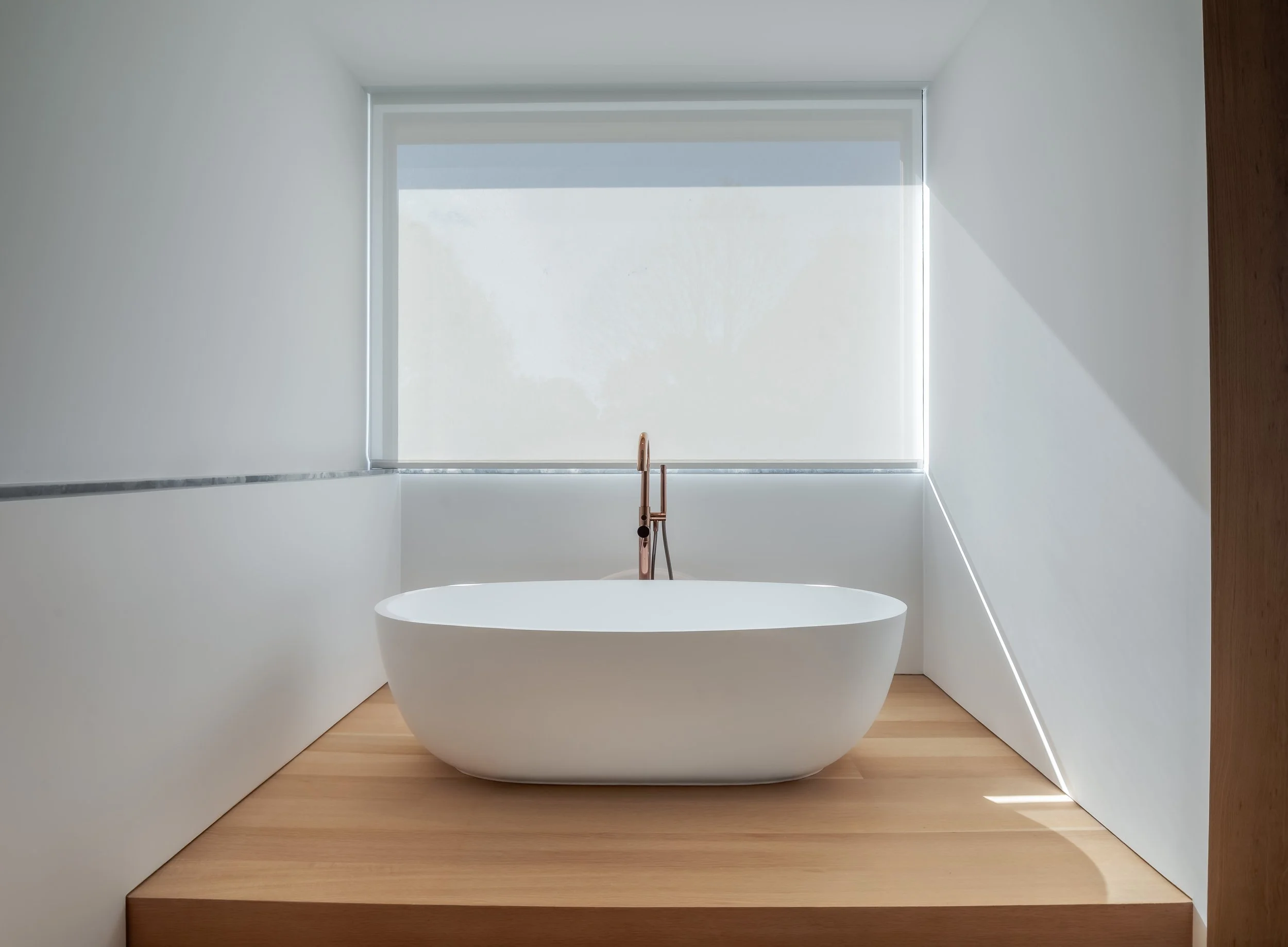
Image taken by Ariel Palma
You finished the job. The punch list is closed, the client is thrilled, and the millwork came out better than the drawings. Then the photos arrive, and the kitchen looks like a real estate listing from 2009. Nobody is going to call you off that image.
If that has happened to you, you are not alone. It is one of the most common frustrations among builders, architects, and interior designers, and it usually has little to do with the quality of your work. It comes down to hiring a photographer who does not speak your language.
The work is great. The portfolio is not.
Most contractors and designers know that strong imagery wins work. Trade publications have been saying so for years. Builder's JLC has noted that many businesses lose jobs because the photography on their website is weak, and that relying on a good camera instead of a good photographer is one of the most common mistakes.
So why does it keep going wrong? Because "photographer" is a wide category. A wedding photographer, a real estate shooter, and an architectural photographer are three different trades. Architectural work means controlling verticals so walls do not lean, balancing a bright window against a dim interior, and understanding how a space is meant to be read. Add construction into the mix and you also need someone who understands a site, not just a finished room.
When the wrong person shoots your project, you pay twice. You pay for the shoot, and then you pay again every time a prospect scrolls past your portfolio.
Three problems we hear about again and again
1. Usage rights nobody explained
Photographers usually keep the copyright and license images for specific uses and time periods. That is standard. The problem is when nobody talks about it until after the shoot. ARCHITECT Magazine quotes Esto's Erica Stoller on this point: it is important to figure out what your rights are from the outset.
It matters more than people expect. If your architect, your plumbing sub, and the cabinet manufacturer all want to post the same images, that affects the license. If your website, Instagram, award entry, and a magazine pitch all need the photos, you want that written down before anyone presses the shutter. A good photographer lays out the options in plain language and does not hide the terms in a paragraph of fine print.
2. Misaligned expectations on the day
Photographers talk about this one a lot. In a recent PetaPixel piece, a commercial photographer called the gap between what a client imagines and what gets delivered the costliest problem in commercial work. It shows up on job sites in a specific way: you wanted the stair detail and the double-height living room, and the photographer spent two hours on a bedroom.
ARCHITECT Magazine makes a related point. The photographer should understand the design problem and how the design solved it. That cannot happen if the first conversation is about price and date only. A useful shoot starts with a shot list, a walk-through of what you are proudest of, and a clear answer to who the images are for: prospective clients, a design award jury, or a trade publication.
3. Unclear pricing and surprise add-ons
Builder's JLC reported that GTM Architects found shoot costs ranging anywhere from $1,200 to $6,000. Digital processing, retouching, assistant fees, and travel can all move the final number. When a photographer quotes a day rate and then adds line items, it is hard to budget and harder to compare.
The fix is simple. Ask for scope, deliverables, number of finished images, resolution, delivery timeline, and license in one written proposal. Then compare.
The construction problem is different from the finished-project problem
Many photographers can shoot a beautifully styled living room. Fewer are comfortable on an active site.
Documenting a build means showing up with the right boots, hard hat, and vest, checking in with the superintendent, and staying out of the way of trades. It means knowing that the framing stage looks best before insulation, that a pour has a window, and that the best shot of your steel erection may only exist for one afternoon. Timing a shoot to your schedule is a construction skill, not a photography skill.
It also means recognizing which moments matter later. Progress imagery can support a marketing story, but it can also protect you. Construction publishers have long pointed out that jobsite photography is becoming a skilled trade of its own because the images feed into documentation, client updates, and claims.
If your photographer needs a briefing on what a rough-in is, someone on your team is going to spend the shoot babysitting.
Drone photography in New York City: do not assume
Aerials can transform a project, especially a large multi-family build, a waterfront property on the North Shore, or a new facade. But New York is not a place to wing it.
The FAA requires Part 107 certification for commercial drone work. New York City adds another layer. The city has a long-standing law that restricts aircraft takeoffs and landings within city limits except in emergencies, and the NYPD has proposed a permitting process for commercial drone operators that includes applications, fees, and community board notification. Rules in this area have shifted over time, so always confirm the current requirements before you commit to a shoot date.
The practical lesson: ask any drone photographer whether they are Part 107 certified, how they handle airspace authorization and local restrictions, and what happens if a flight cannot happen on the scheduled day. A vague answer is a warning sign. A project that cannot legally fly is a project that does not get aerials.
AI images and the trust problem
There is a newer wrinkle for designers and builders. AI image tools can produce a stunning room in seconds. Some photographers use them for mood boards and concept visuals, and that is a fair use. Showing finished work is another matter.
A portfolio built on generated images invites a question every serious client eventually asks: did you actually build this? The PetaPixel photographer put it well when he said photography remains valuable for capturing real moments that cannot be generated. For a contractor, real is the entire pitch. The tile, the reveal, the scribe to the wall. Prospects can tell, and a jury certainly can.
What good looks like
If you strip it down, a strong architectural and construction photography partnership looks like this:
A conversation before the shoot. Shot list, priorities, audience, and timing.
Site awareness. Safety gear, check-in, and respect for the trades.
Clear terms. Written scope, deliverables, delivery date, and usage rights.
Print-ready files. Resolution that holds up for award submissions, trade press, and large-format displays.
Compliant aerials. Part 107 certification and a plan for local airspace rules.
Honest imagery. Photos that show what you built.
Why the NYC and Long Island market is its own animal
Work here is dense, fast, and competitive. A Manhattan gut renovation may have a tight freight elevator window and a co-op board with opinions. A Long Island custom home may be all about light, landscape, and the way the house sits on its lot. A Brooklyn townhouse has narrow rooms that need careful lens choices to feel real rather than distorted.
You need a photographer who knows how to work around loading dock schedules, who understands that access can disappear, and who can drive from the Gold Coast to a Queens job site without treating it as a major expedition. Local knowledge saves you real time.
The takeaway
Good photography is not a luxury line item. It is part of how builders, architects, and designers get the next job. The cost of the wrong photographer is rarely the invoice. It is the project that never lands because the portfolio did not do it justice.
Ask the questions up front. Get the terms in writing. Hire someone who knows a punch list from a price list.
Sources
If I Had a Camera: How to Hire an Architectural Photographer (Professional Builder / JLC)
How to Commission an Architectural Photographer (ARCHITECT Magazine)
A Commercial Photographer's Take on When to Use AI (and When Not To) (PetaPixel)
After Years of a Total Ban, It Will Soon Be Legal to Fly Drones in New York City (UAV Coach)
Ready to work with a photographer who gets it?
Palma Design is an NYC-based architectural photography studio specializing in construction documentation, completed project portfolios, and FAA-certified aerial drone photography across New York City and Long Island. Whether you're a builder documenting a project from groundbreaking to ribbon-cutting, an architect building your portfolio, or an interior designer showcasing your latest install, we speak your language and show up prepared.