
Why Your Last Photographer Didn't Do Your Project Justice (And What to Do Instead)
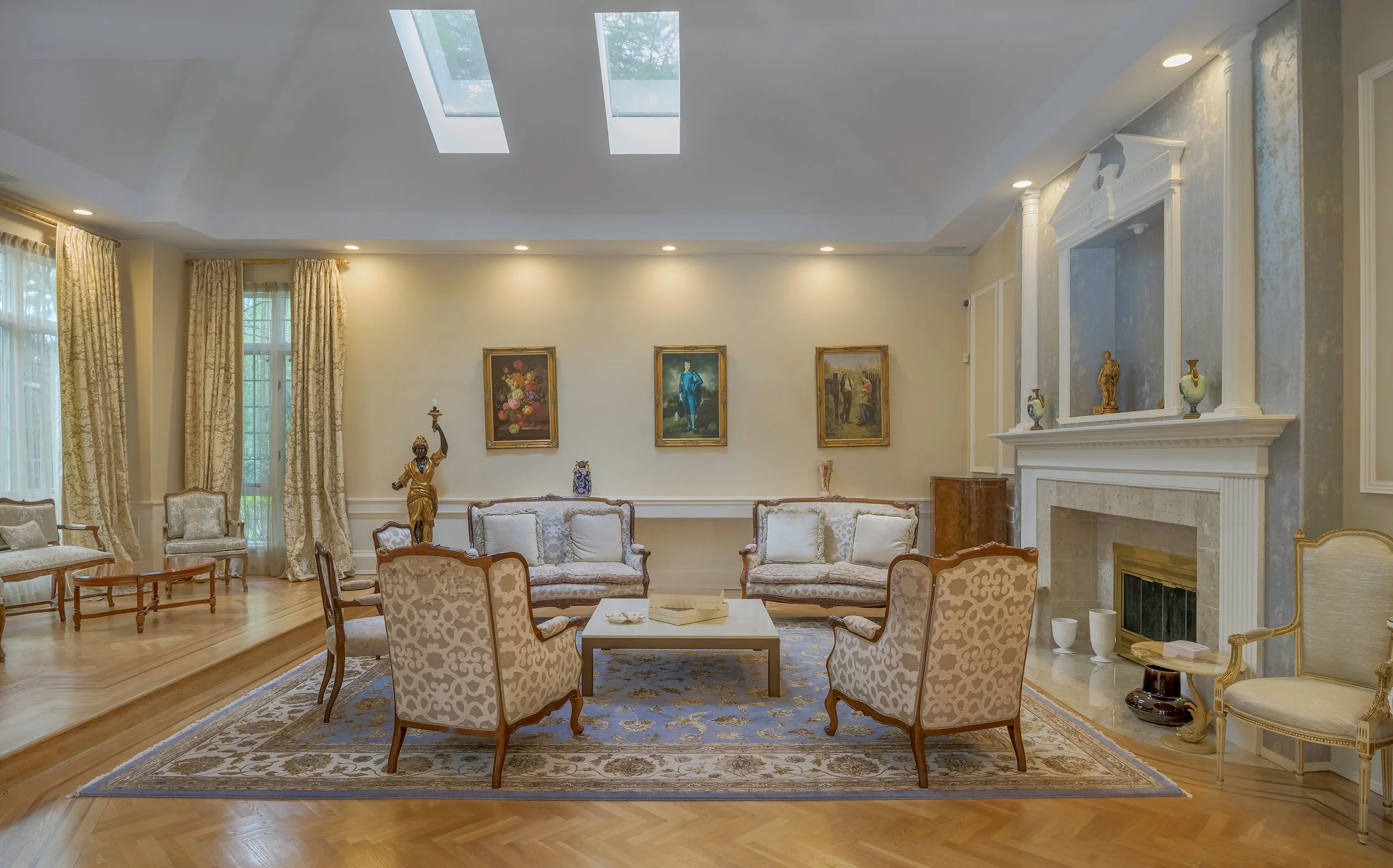
You finished the job. The build came out exactly the way it was supposed to — clean lines, perfect execution, every detail exactly as designed. You had a client who's thrilled, a project that came in on time, and work you're genuinely proud of.
Then you hired a photographer. And the photos came back looking like a real estate listing.
If you're a builder, contractor, architect, or interior designer working in the New York metro area or on Long Island, you've probably been here. You invested serious time and budget into a project, you knew it needed to be documented, and somewhere between "let's get some photos" and the final delivery, something went flat. The images look fine — technically acceptable — but they don't show your work. They don't show the craftsmanship in the millwork, the way the natural light moves through a space, the material decisions that made this build different from every other house on the block.
Here's the honest truth: the photographer was probably the wrong hire for the job.
The "Real Estate Photographer" Problem
This is the most common mistake we see in the construction and design world, and it's completely understandable. Real estate photographers are everywhere, they're fast, and they're affordable. When you need photos quickly and budget is a concern, they seem like the obvious call.
But real estate photography and architectural photography are two fundamentally different crafts with two completely different goals.
A real estate photographer's job is volume and speed. Their assignment is to document every room in a house as efficiently as possible — usually in under two hours — so a listing can go live. They're trained to shoot wide, make rooms look spacious, and move on to the next job. They shoot fast, they use ultra-wide lenses that distort perspective, and they're not there to study the design.
An architectural photographer's job is something else entirely. Their assignment is to communicate your work — to capture the decisions you made, the details that set your project apart, and the visual story of a space in a way that makes someone who wasn't there feel like they were. That takes time. It takes knowledge of how light behaves, how to correct perspective without distorting reality, and most importantly, it takes an understanding of what you actually built.
When an architect or interior designer submits photos to a publication, enters an award competition, or puts together a portfolio deck to win their next commission, real estate images don't cut it. The distortion is too obvious. The lighting is flat. The shots are too wide to show the details that matter. Industry jurors and prospective clients can tell the difference immediately — and substandard imagery signals substandard work, even when the work itself is exceptional.
The Documentation Gap That's Costing Builders Bids
There's a second problem that's specific to builders and general contractors, and it's one that doesn't get talked about enough: most builders aren't documenting their projects at all — and the ones who are, often document at the wrong time.
Here's what typically happens. A builder finishes a project. They're proud of it, they know it came out well, and somewhere in the back of their mind they mean to get it photographed. But the job is done, the crew has moved on, there are three more projects in progress, and the photography call never happens.
Or — and this is equally common — they do get photos, but they only photograph the final product and miss everything in between.
This is a real missed opportunity. For builders, the process is part of the story. A client who is evaluating three contractors doesn't just want to see the finished kitchen. They want to understand how you work — the precision of your framing, the quality of your rough-in, the way your crew operates on a job site. Progress documentation, captured professionally at key milestones, tells that story in a way that a final walkthrough never can.
According to industry data, construction portfolios are often the deciding factor between winning and losing a competitive bid. Clients want to see proof of capability before they trust someone with a multi-million dollar project. If your portfolio is thin, inconsistent, or missing entirely, you're starting every bid at a disadvantage regardless of how good your actual work is.
And in the New York metro market, where the competition for high-end residential and commercial work is intense, showing up with strong visual documentation isn't optional anymore. It's the price of entry.
What "Understanding Construction" Actually Means for a Photographer
Here's something that matters more than most clients realize when they're evaluating a photographer: site experience.
A photographer who has never worked around an active construction project is a liability. Job sites have real safety considerations. Timing matters — there are phases of a build that photograph beautifully and phases that are better left undocumented. An experienced construction photographer knows when to show up, where to position themselves, how to work around the crew without getting in the way, and how to find the angles that tell the story of a build without making the mess that's inherent to any job site look like chaos.
They also know what to look for. The moment when the structural steel is visible but the interior is still open to natural light. The stage of a tile installation that shows the pattern and precision before grout muddies the lines. The point in an exterior build where the landscaping is in but the dumpster is gone. These windows are short, and missing them means losing those shots permanently.
This is especially true in the New York area, where weather, tight scheduling, and site access add layers of complexity that a photographer unfamiliar with construction will struggle to navigate.
The NYC and Long Island Difference
Working in this market is its own thing. The projects are bigger, the clients are more discerning, and the visual standard expected in marketing materials, press submissions, and portfolio presentations is genuinely higher than in most other markets.
The architects and designers who consistently land the best projects in this region share one thing in common: their photography looks like their work deserves. It's specific. It's editorial. It shows the thought behind the design, not just the finished surface.
Builders and contractors who consistently win competitive bids at the high end of the market also tend to have portfolios that do serious work for them — showing scope, showing quality, and showing the kind of attention to detail that reassures a client about what it's like to work with them.
The good news is that this is entirely achievable. It just requires working with someone who understands both sides: the photography craft and the construction and design world.
What the Right Photographer Changes
When you work with an architectural photographer who actually understands your industry, a few things change.
First, the pre-shoot conversation is different. Instead of just scheduling a time and showing up, you're talking through the project — what you want to highlight, who the audience is, whether this is going into a portfolio or a publication pitch or a bid deck. That conversation shapes the entire shoot.
Second, the shots you get back are usable. Not just technically competent, but genuinely effective for the purpose you need them for. The composition is deliberate. The light is controlled. The details that matter are actually in frame.
Third, over time, your portfolio starts to work for you in a way it probably hasn't before. New clients come in having already seen your work and already having a sense of what you're capable of. That shortens the sales conversation and raises the quality of client you're attracting.
For builders and contractors, consistent project documentation also creates something valuable you might not have thought about: a visual record that can support you in the event of a dispute. Construction disputes are expensive and common, and proper site documentation — captured professionally at key stages — is some of the strongest evidence you can have.
Ready to Document Your Next Project the Right Way?
Palma Design is an architectural and construction photography studio serving builders, general contractors, architects, and interior designers across New York City and Long Island. We understand construction timelines, we know how to work on active job sites, and we shoot for the purpose your images actually need to serve — whether that's a portfolio, a publication, a bid presentation, or a brand refresh.
If you have a project wrapping up or one in progress that deserves to be documented properly, we'd love to hear about it.
Get in touch with Palma Design — and let's talk about what your work deserves to look like.So you call a photographer.
Maybe it's someone you've used before. Maybe it's a referral from a colleague. Maybe it's whoever came up first on Google. A few weeks later, you get back a folder of images that look… fine. Technically correct. Not embarrassing. But not compelling, either. The kitchen feels flat. The exterior shot makes the house look smaller than it is. The light is harsh and the angles make the ceilings look low.
You post a couple on Instagram anyway. A few likes from people you already know. No new inquiries.
Sound familiar? You're not alone — and the problem isn't your work. It's who you hired to document it.
The Hidden Cost of "Good Enough" Photography
In the NYC and Long Island construction market, you're not just competing on quality of build. You're competing on presentation. Architects, developers, and luxury homeowners are scrolling through dozens of portfolios before they pick up the phone. And when two builders have comparable reputations and pricing, the one with the stronger visual portfolio wins the call every time.
This is the pain point that doesn't show up on a budget spreadsheet but quietly bleeds revenue for years. A mediocre set of photos from a finished project doesn't just fail to win you new business — it actively undercuts the investment you made in the work itself. You spent months executing at the highest level, and a flat, uninspired photo shoot reduces all of that to a thumbnail that gets scrolled past.
Industry research consistently shows that poor photography causes potential clients to abandon websites before they even read your content. In a market as competitive and visually saturated as New York, that's not a minor inconvenience. That's a leaky pipeline.
The Real Estate Photographer Problem
Here's the most common mistake builders and contractors make: they hire a real estate photographer for an architectural job.
It makes intuitive sense on the surface. Real estate photographers shoot houses. You build houses. They know how to use a wide-angle lens. Done, right?
Not quite.
Real estate photography is a volume business. A real estate photographer is optimized to shoot 10–15 properties a week, turning around edited images in 24 hours, prioritizing speed and throughput. Their job is to make a space look livable and sellable to a buyer who's moving in. That means staging tricks, flattering angles, and a consistent, predictable look that works for MLS listings.
Architectural and construction photography is a completely different discipline. It's about capturing the design intent — the relationship between light and structure, the way a roofline reads against the sky, the craftsmanship in a staircase detail that took your crew three weeks to execute perfectly. An architectural photographer isn't just documenting a space. They're translating what makes it exceptional into a two-dimensional image that makes a sophisticated client stop and look twice.
This is a skill set that takes years to develop, and it's rare. It requires understanding how buildings are designed, how light moves through space across the day, what angles make architecture sing versus flatten it — and critically, it requires someone who has spent enough time around construction to know what you are most proud of and what details actually matter.
The Timing and Site Access Problem Nobody Talks About
There's another layer that builders and general contractors know intimately but rarely think about when hiring a photographer: timing.
The window to shoot a completed project is often surprisingly narrow. Landscaping hasn't gone in yet. Temporary construction lighting is still up. The punch list isn't quite done. The client is moving in next week. The shoot has to happen now, or the opportunity closes.
Photographers who don't understand construction timelines create friction here. They need extensive lead time. They're not comfortable on an active job site. They don't know the difference between a punch list and a final walkthrough. They show up and the temporary construction materials haven't been cleared, and suddenly half the day is lost to logistics that an experienced construction-adjacent photographer would have anticipated and planned around.
The best architectural photographers for builders aren't just image-makers. They're project collaborators. They understand that your schedule is driven by inspections, client move-ins, and subcontractor availability. They show up prepared. They can navigate a site that isn't 100% finished and still find the angles that tell the story of what you built. And they know when to come back for the exterior shot during golden hour without making you feel like you're managing their schedule on top of everything else.
What Great Architectural Photography Actually Does for Your Business
Let's make this concrete, because it's easy to think of photography as a nice-to-have rather than a revenue driver.
When you have a portfolio of genuinely compelling images — the kind where the light is doing real work, where the architecture reads the way it was meant to, where the craftsmanship is obvious even in a 1,200-pixel thumbnail — three things happen.
First, your website becomes a closer. Instead of serving as a brochure that people skim, it becomes a portfolio that stops people mid-scroll and makes them want to know more. Architects, developers, and high-net-worth homeowners make emotional decisions before they make rational ones. A great image generates that emotional pull.
Second, your referrals compound. When architects and interior designers recommend builders, they're putting their own reputation on the line. They're more likely to recommend a builder whose work they've seen represented beautifully, because those images reflect on them too. Strong photography makes you a safer, more prestigious referral.
Third, you start attracting the clients who don't negotiate on price. This is the long game. The clients who care deeply about design — architects, thoughtful developers, luxury homeowners — respond to photography that demonstrates care and intentionality. They're not price-shopping. They're looking for a builder who operates at their level. Your photography is the first signal you send about what level that is.
What to Look for in an Architectural Photographer in the NYC and Long Island Market
Not all photographers who claim to specialize in architecture actually do. Here's what separates the real deal from the generalists:
A portfolio with depth and variety. Look for images that show an understanding of light, not just good equipment. Can they shoot interiors and exteriors with equal confidence? Do the images have a point of view, or do they all look like the same generic "nice room" shot?
Familiarity with construction and the design industry. They should be able to talk knowledgeably about what makes your work distinctive — the structural choices, the material palette, the site constraints you worked around. If they don't know what a GC does or how a project phases, that's a red flag.
Flexibility around your schedule. They should understand that construction timelines shift and that the shoot window might change with 48 hours' notice. The right photographer is a partner, not a vendor who needs three weeks and a perfectly staged space.
Local market knowledge. The architecture of Long Island estate homes is different from a Brooklyn brownstone renovation, which is different again from a Midtown commercial fit-out. A photographer who works extensively in the NYC and Long Island market understands those distinctions and knows how to position your work within the regional visual context where you're actually trying to win clients.
Palma Design: Built for Builders, Architects, and the Work That Demands to Be Seen
At Palma Design, architectural and construction photography is all we do. We work exclusively with builders, general contractors, architects, and interior designers in the New York metro area and Long Island — and that focus means we bring a level of specialization that generalist photographers simply can't match.
We understand construction schedules. We're comfortable on active job sites. We know what makes a luxury custom home different from a high-end renovation, and we know how to photograph both in a way that speaks directly to your next client. We plan shoots around your timeline, not ours — and we deliver images that don't just document your work but make the case for it.
If you've been settling for photography that's technically fine but not doing real work for your business, it's time to change that.
Ready to let your work speak for itself? Reach out to Palma Design to schedule your project shoot. Visit palmadesigns.studio or email us directly to start the conversation. Your next best project deserves to look like it.
Palma Design · Architectural Photography · Drone Documentation · Web Design · NYC, Long Island & North NJ